🪩 Black Eyed Peas + New Year’s Day?
Enjoying black eyed peas on New Year’s Day is a long-held tradition across the South. But why? How did it start? What makes black eyed peas “lucky”?Black eyed peas are a bean native to West Africa, and while they weren’t necessarily a New Year’s staple, they were (and still are!) commonplace at special meals. In West Africa, black eyed peas were considered good luck charms and a symbol of good luck, prosperity, and fertility.As European and American colonizers enslaved the people of West Africa, black eyed peas were brought over as provisions. Enslaved West Africans planted and grew black eyed peas in gardens on Southern plantations, and the beans eventually became part of the diets of enslaved peoples and slaveholders alike.Over time, the hearty legumes became not just a holiday tradition in the States, but a time-honored superstition, especially in Black and Southern homes. You’re very likely to see black eyed peas served on their own or on top of rice (a dish known as Hoppin’ John), or along with greens to represent money. For many, eating black eyed peas on the first day of the new year is a must if you have any hope of success and prosperity for the next 365 days.Read More: “Why Do We Eat Black-Eyed Peas on New Year’s Day?” by Adrian Miller
🫘 What Makes This Recipe So Good
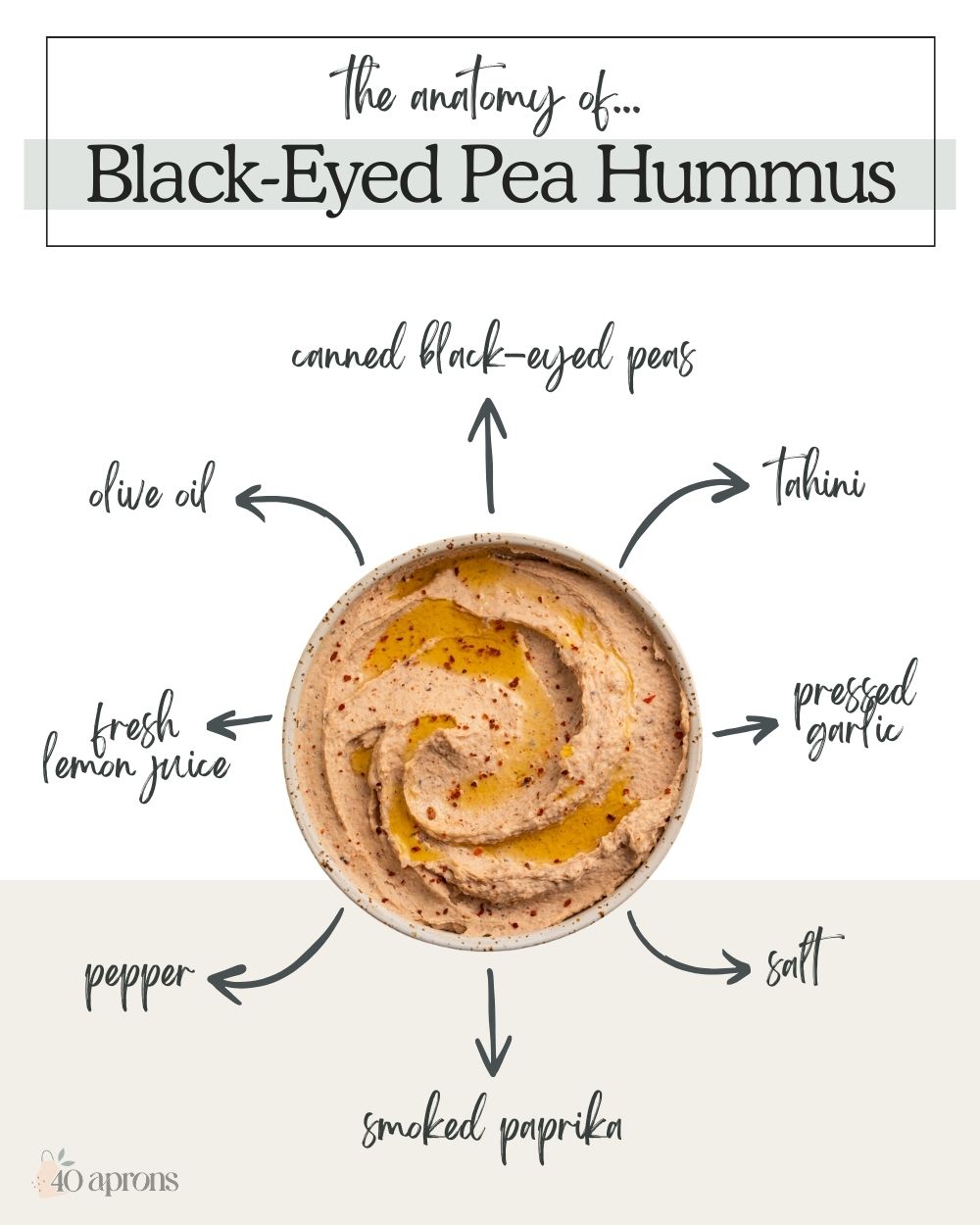
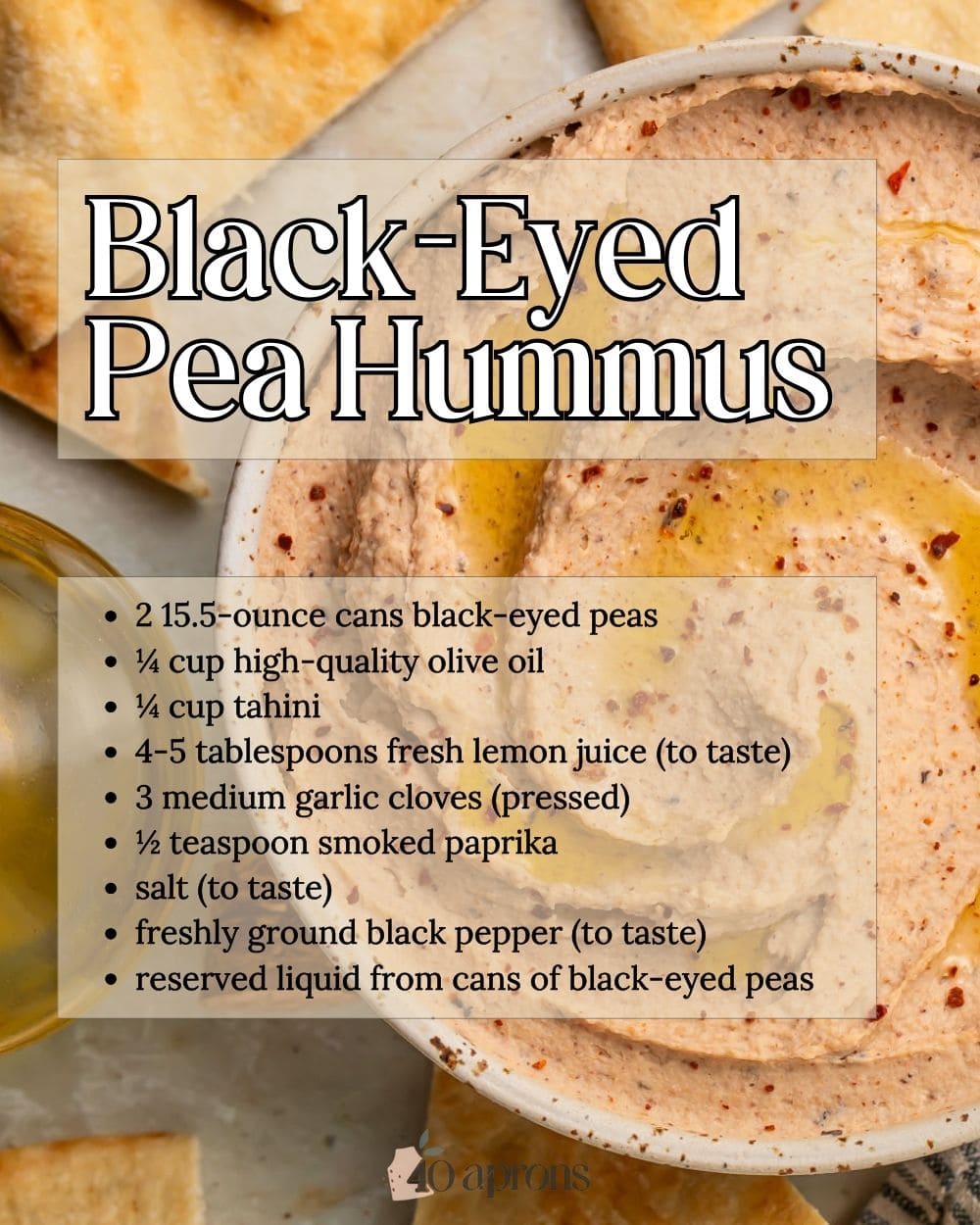
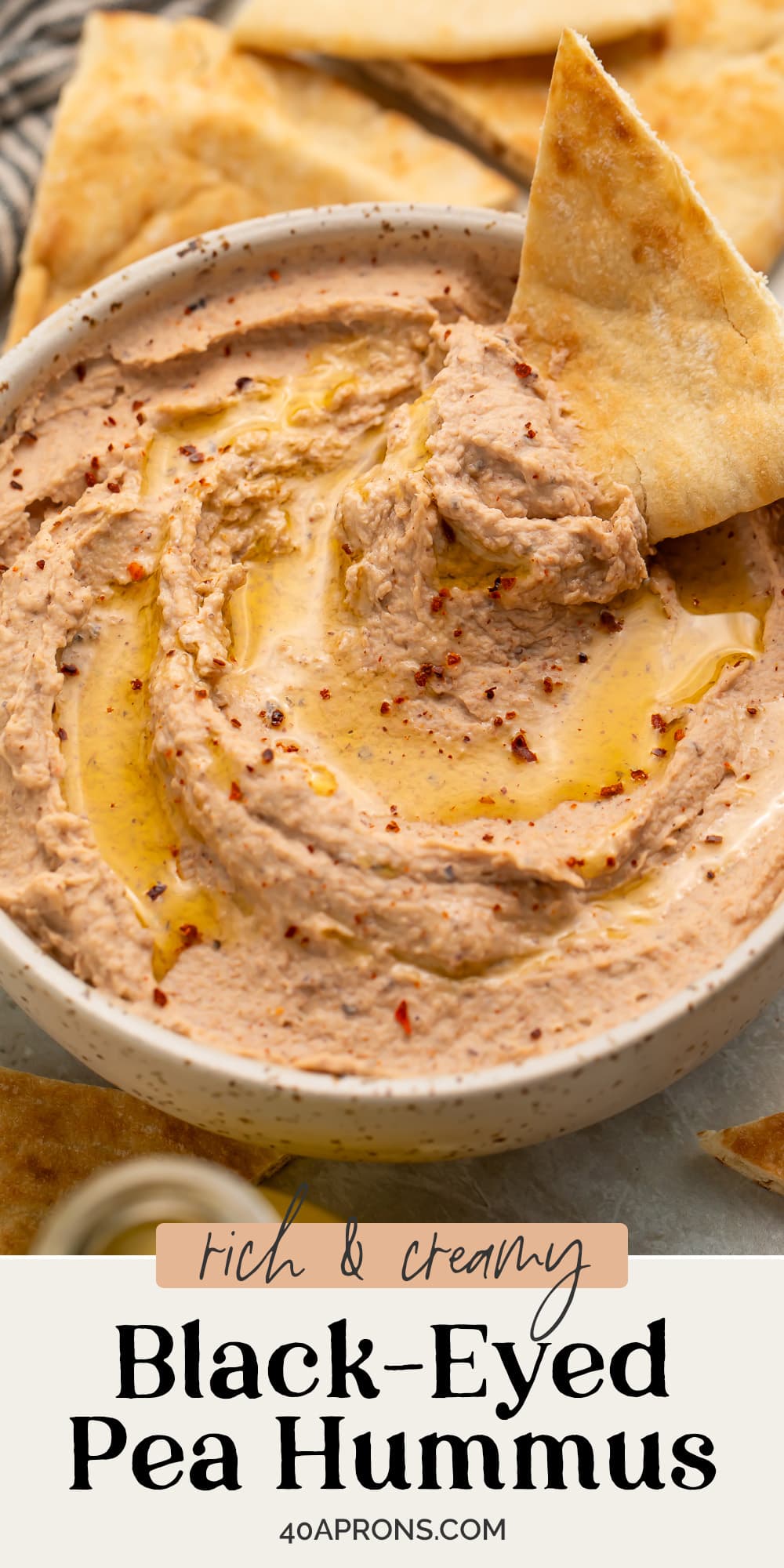
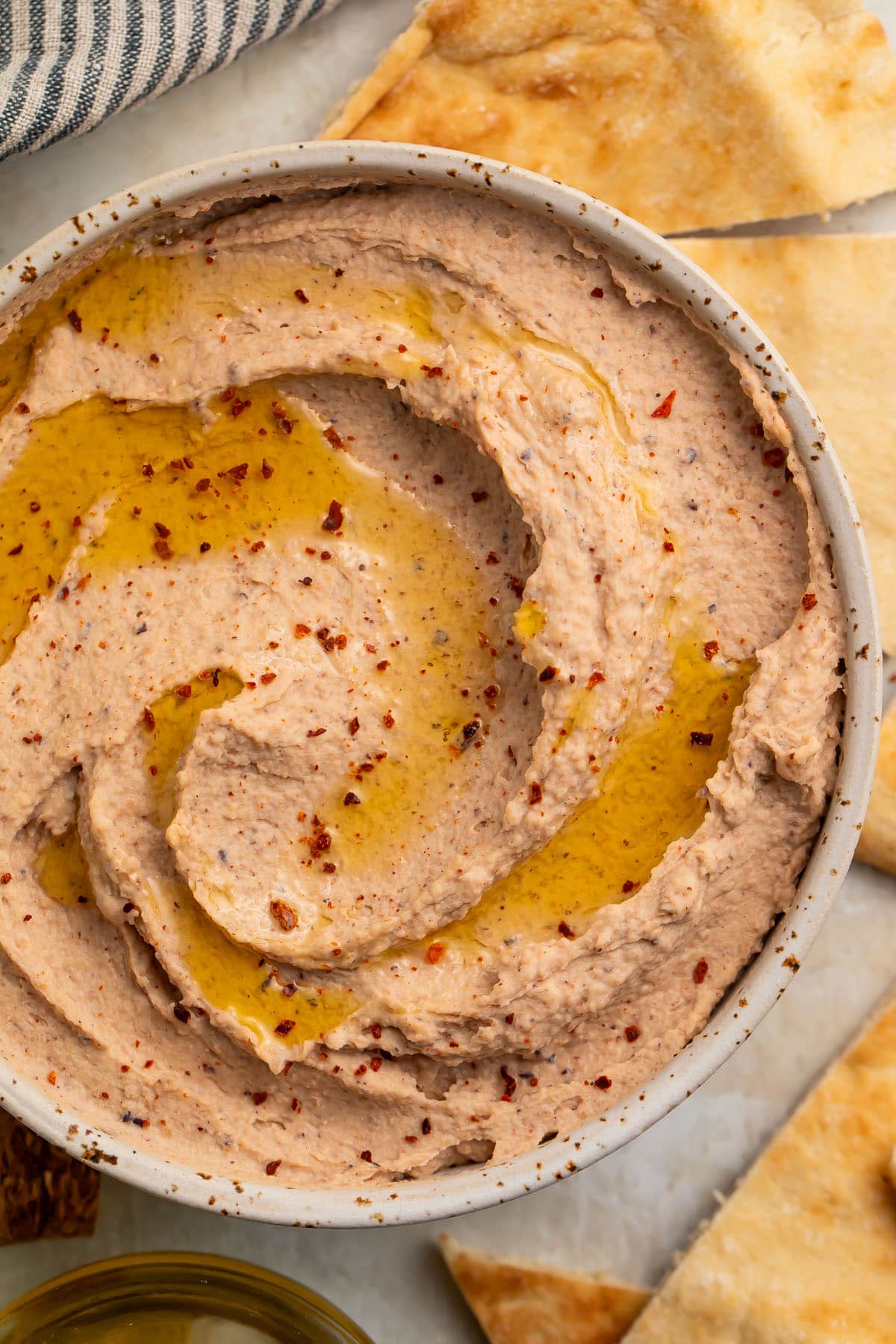
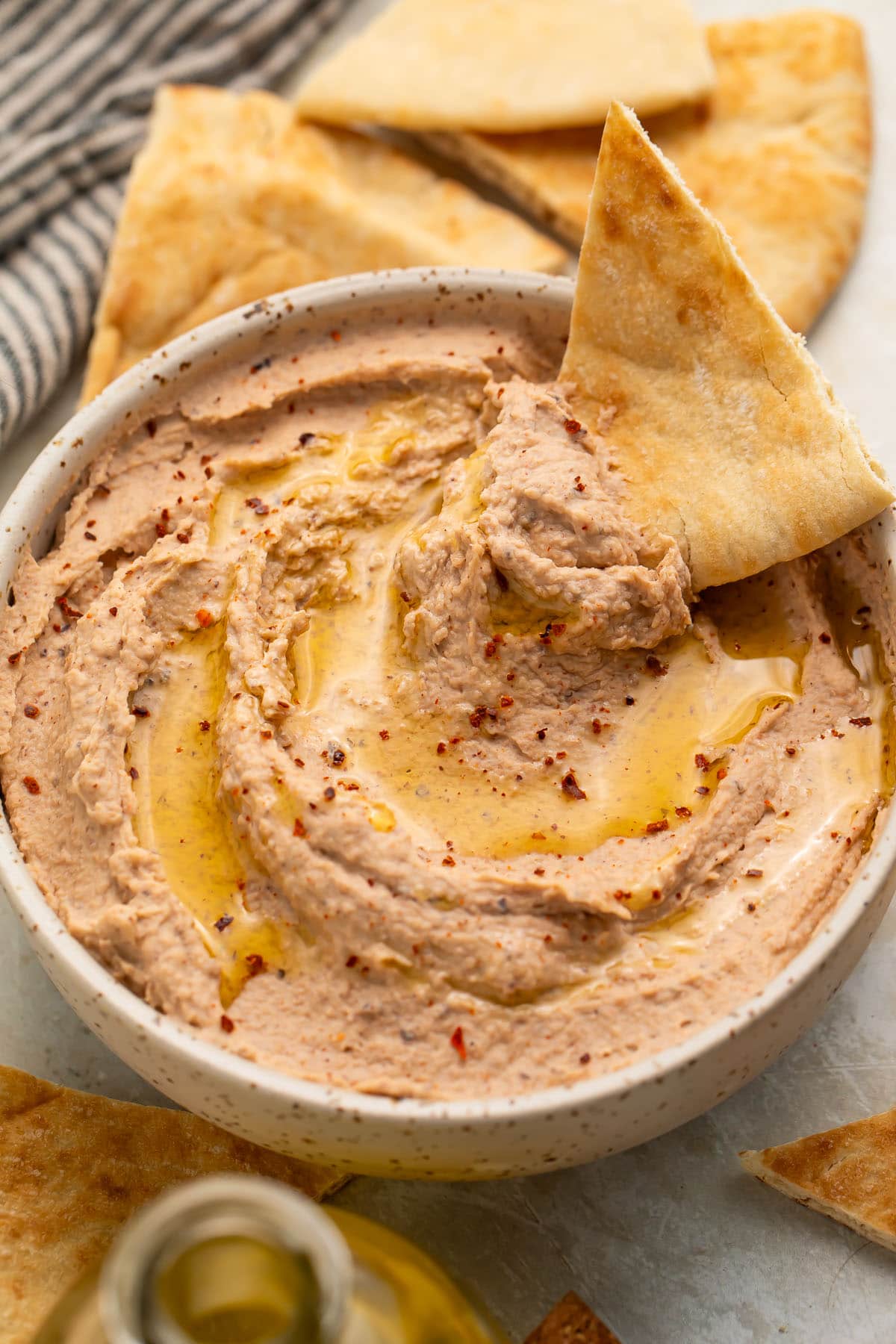
Savory black eyed pea hummus is a delicious twist on the more traditional chickpea hummus, and it’s absolutely incredible. It has a base of earthy black eyed peas, nutty tahini, peppery olive oil, zesty lemon juice, and bold garlic, tied together with smoked paprika, salt, and black pepper. The flavors are balanced beautifully, and the smooth blend of ingredients ensures you get a little bit of everything in each bite. There’s no cooking required at all. If you’re making this hummus for your New Year’s Eve or New Year’s Day festivities, I’m sure you can appreciate a no-cooking-required recipe right after the marathon cooking days of Thanksgiving and Christmas. I know I sure do!
👩🏼🍳 Chef’s Tips
Want to make your hummus sesame-free, or just cut down the cost a bit? No problem – just omit the tahini. It does make a difference to the flavor, and I recommend using it if you’re able, but black eyed pea hummus is just as delicious without tahini as it is with. You can serve black eyed pea hummus right after you make it if you want, but! I really recommend you chill it in the fridge for at least 30 minutes first. That extra time gives all the ingredients time to meld, making the flavors deeper and more vibrant. For the best-tasting hummus, let it chill first. If you want to use dry black eyed peas instead of canned, that’s no problem. You’ll just need to soak the dry beans first so they’re soft enough to run through the food processor and blend with everything else. Rinse them under running water first, then put them in a big bowl and fill them with water. A good rule of thumb is 3 cups of water for every 1 cup of dry black eyed peas. You can also go by sight – the waterline should sit roughly 3 inches above the top layer of beans. Put the bowl in the fridge and let the beans soak 6-12 hours.
🍾 More Amazing New Year’s Recipes
Cocktail Blini (For Caviar and More!) Stuffed Artichokes Chicken Velvet Soup Lobster Mashed Potatoes Red Velvet Cake Mix Cookies Crab Stuffed Mushrooms 2-Ingredient Bacon-Wrapped Dates (with Stuffed Option) Champagne Jello Shots Crockpot Spinach Artichoke Dip Oyster Brie Soup (from Disney World’s Hollywood Brown Derby) 3-Ingredient Sausage Dip (Stovetop or Crockpot) Baked Stuffed Shrimp