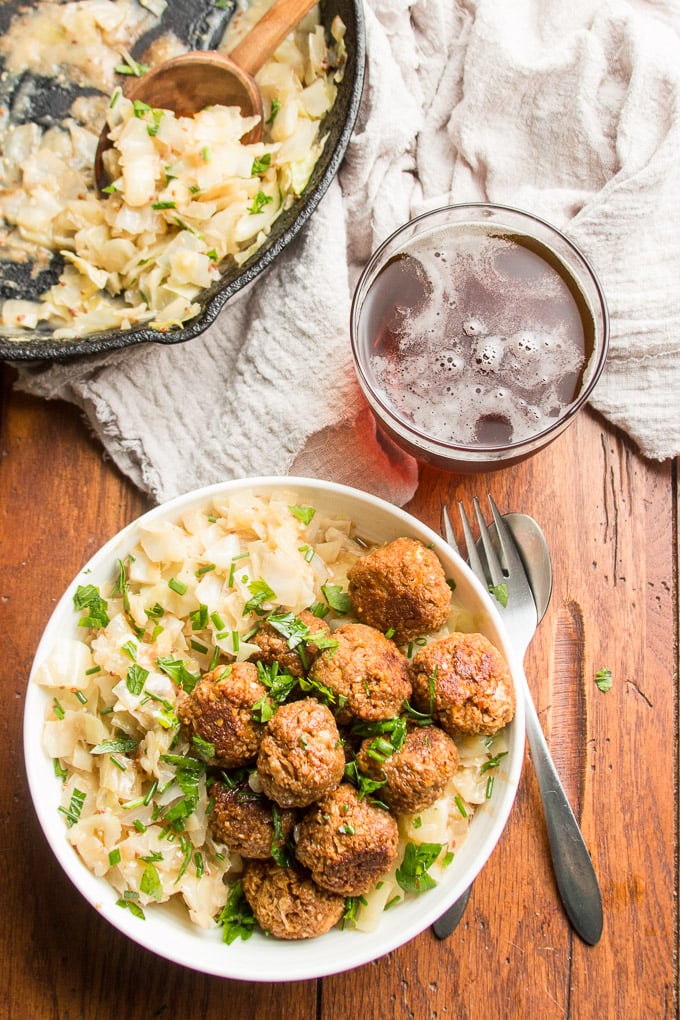
First, a disclaimer: this dish is in no way authentic. I’ve never had a German meatball in my life, though I’m pretty sure they’re not made with tofu. I’m not sure if creamy mustard sauce is really a thing in Germany. Or serving meatballs with cabbage. So where did this meal come from? Basically I wanted to share something German-inspired for Oktoberfest. Even though it’s not something I normally celebrate and I’m not a beer drinker, I really like the idea of enjoying some cozy comfort food as we go into fall. So I browsed German and German-inspired dishes for inspiration, and I did indeed get inspired, by this this German meatball recipe, and this kielbasa skillet. I decided to make a big mish-mosh vegan dish that incorporated elements of both recipes, and this is what I came up with!
How to Make Vegan German Meatballs
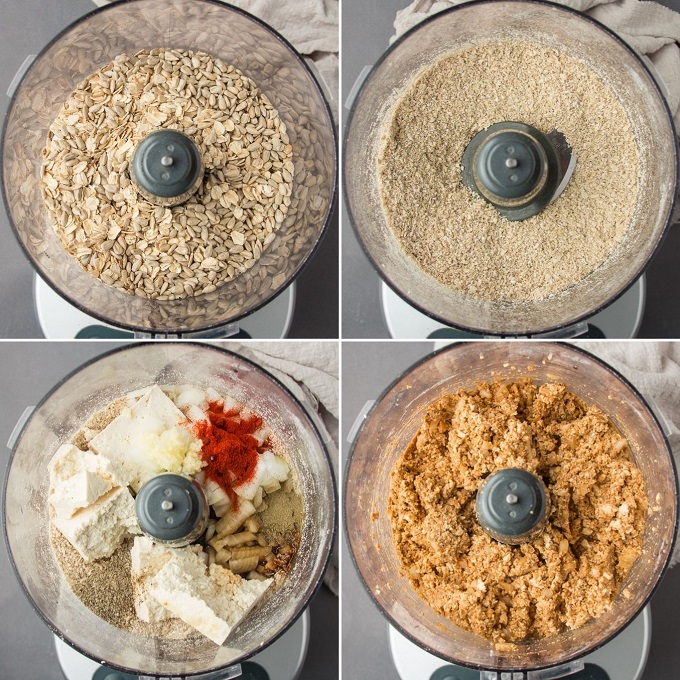
You can actually make vegan meatballs out of all kinds of things, but today I’m using tofu. I really like the texture tofu gives my meatballs, and it has a nice neutral flavor for soaking up all the seasonings we’ll be using. I adapted my German meatballs from this Asian-inspired tofu meatball recipe. First off, you’ll need to blend your meatball ingredients in a food processor. Start with some oats and sunflower seeds. These are our dry ingredients that will help give structure to our meatballs. Once they’re blended you can add everything else to the food processor: tofu, some onions and garlic, as well as a handful of spices and seasonings. Pulse the food processor until everything is mixed, being careful not to overblend.
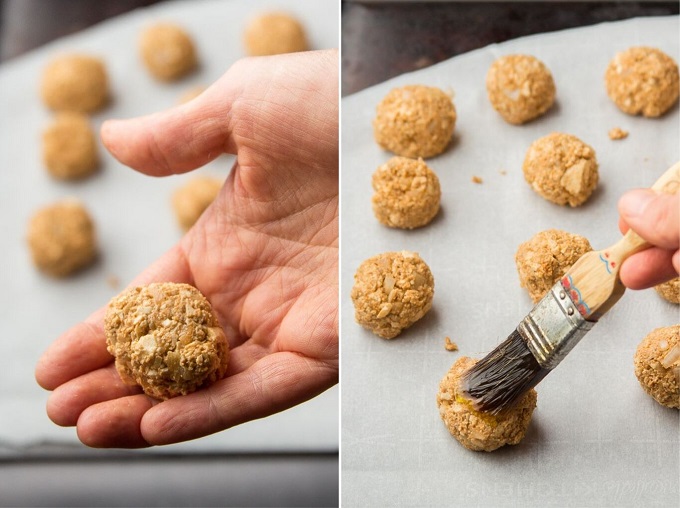
Now preheat your oven and line a baking sheet with parchment paper. Roll your tofu mixture into balls that are about 1-inch in diameter. I like to brush mine with a bit of oil to help them brown.
Bake the meatballs for about 25 minutes, flipping them about halfway through.
How to Make Cabbage with Mustard Sauce
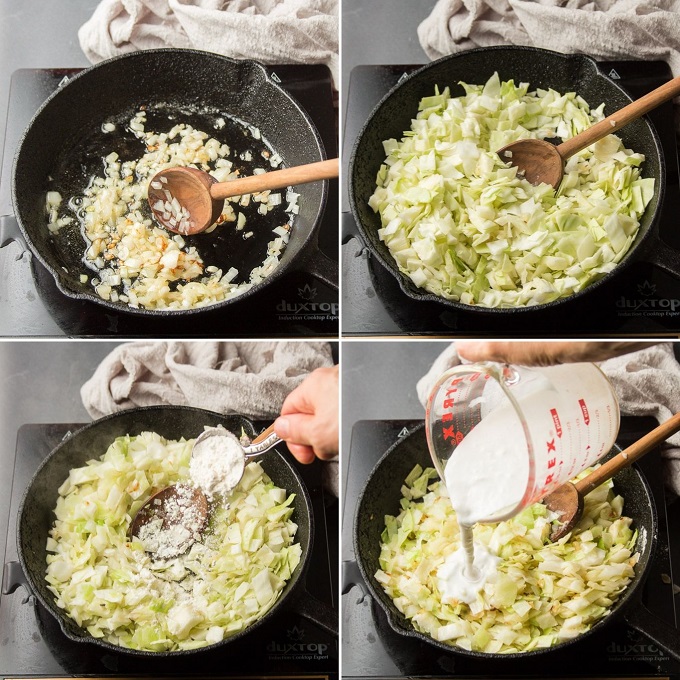
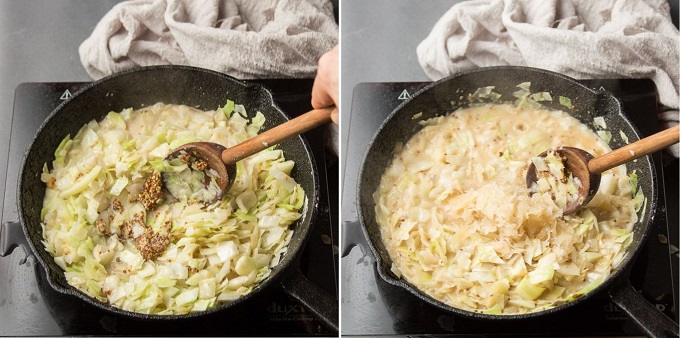
While the meatballs bake you can make your cabbage. Start by heating up some vegan butter in a skillet. Once the butter is hot, add an onion and cook it for a few minutes until it starts to brown. Next, add some chopped cabbage. Cook the cabbage for a few minutes until it starts to soften up. Garlic goes in next — just cook that for about a minute, until it starts to smell wonderful. Sprinkle a bit of flour into the skillet. This is going to help thicken up the sauce. Stir everything well to coat the cabbage with flour and then continue cooking and stirring for a couple of minutes. Coconut milk goes in next. Kind of weird, right? Not really! Coconut milk is the base for our sauce. It acts like heavy cream in this recipe, and the other seasonings will help to disguise the coconut flavor.
You’ll also add some vegetable broth and whole grain mustard at this point. Let everything simmer for a bit until the sauce has thickened up and the cabbage is as tender as you like it. Sauerkraut goes in last. Tip: naturally fermented sauerkraut is full of probiotics! If you want the full benefit of these probiotics, take your cabbage off of the burner and let it cool down a bit before adding the sauerkraut — this prevents the heat from killing them.
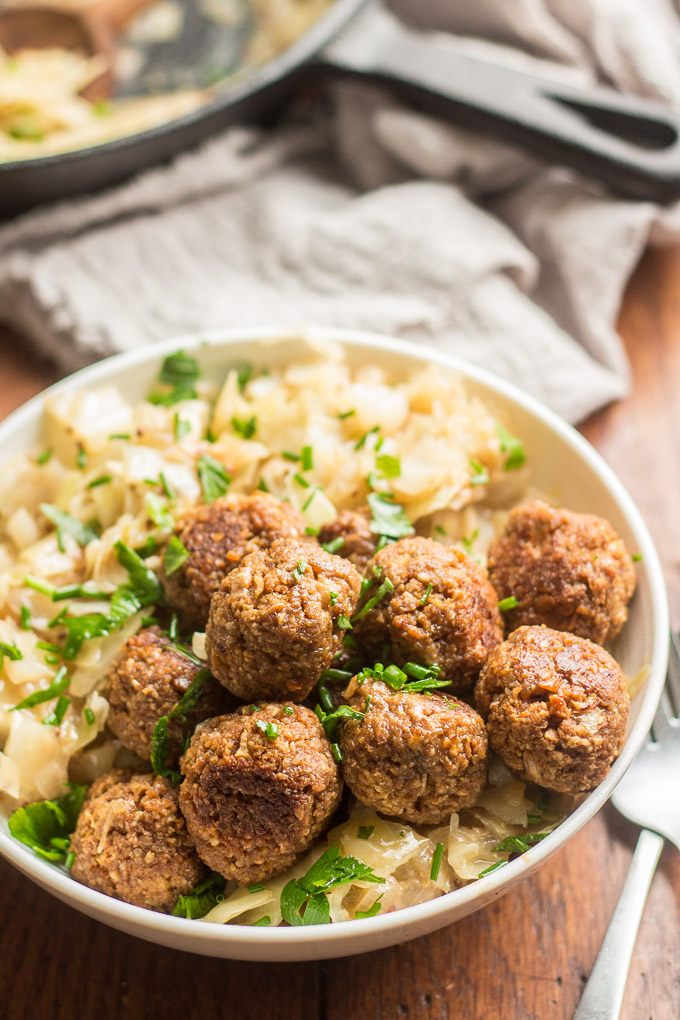
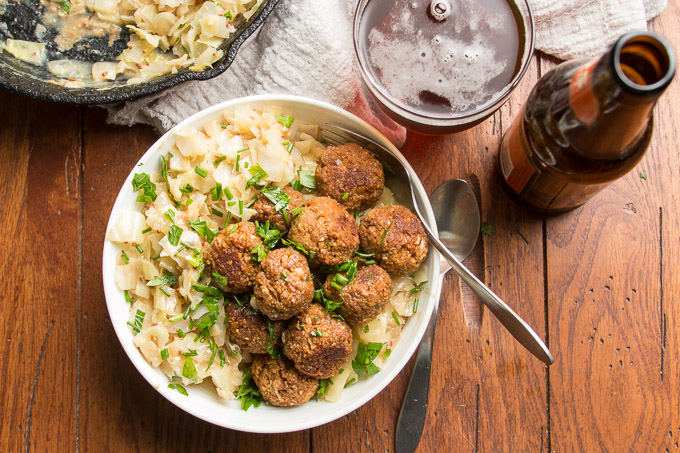
Give the cabbage a taste-test and season it with salt and pepper. Serve the meatballs over the cabbage and top everything with a sprinkling of chives. Enjoy!
Make ahead option: you can mix the ingredients for the meatballs up to 2 days in advance. Store the mixture in a sealed container in the fridge, then when you’re ready, roll and bake the meatballs. Once prepared, the cabbage and meatballs will keep in a sealed container in the refrigerator for 2 to 3 days. Is there a substitute for the oats? Panko breadcrumbs might work, though I haven’t tested the recipe with them. If you try this option, add them to the food processor with the tofu instead of blending them with the sunflower seeds. Can this recipe be made gluten-free? Possibly! Use a gluten-free tamari instead of the soy sauce and make sure your Worcestershire sauce and oats are gluten-free. You’ll also need to replace the flour used in the sauce. Arrowroot or a slurry made with cornstarch and cold water would probably be your best bet, but I haven’t tried either option. Can you taste the coconut milk? I couldn’t taste it, but if you’re super sensitive/hate the taste of coconut, you may want to try subbing another non-dairy milk. Use one that’s unflavored and unsweetened. Cashew milk would be a good choice! Where can I find vegan butter? Lots of regular supermarkets carry vegan butter near the regular butter or in the natural foods section. Look for brands like Earth Balance and Miyoko’s. If you can’t find it at your regular supermarket, try a place like Whole Foods. Where can I find vegan Worcestershire sauce? I usually need to make a trip to Whole Foods for this. Look for brands like Annie’s and Edward & Sons. If you can’t find it in stores, it’s available online.
Like this recipe? If so, be sure to follow me on Facebook, Pinterest or Instagram, or subscribe to my newsletter. And please stop back and leave me a review and rating below if you make it!